


How Much is Too Much? What We're Really Asking When We Attack Nonprofit Pay

Why the people most upset about nonprofit salaries are often the same people who don't want government doing this work either
Lately I've been watching the comments roll in every time a nonprofit's tax filing or a leader's salary becomes public. "I guess I got in the wrong business." "Nonprofits are being given too much money." "Nonprofits are ripping us off." The tone is consistent: disbelief, a little resentment, sometimes real anger.
Here's what makes me pause every time I read one of these threads. Many of the same people posting them also say, in the next breath, that government shouldn't be the one running food banks, shelters, mental health clinics, or after-school programs. They want it handled locally, efficiently, "like a business." So we built a sector to do exactly that — and now we're asking why the people running it get paid at all.
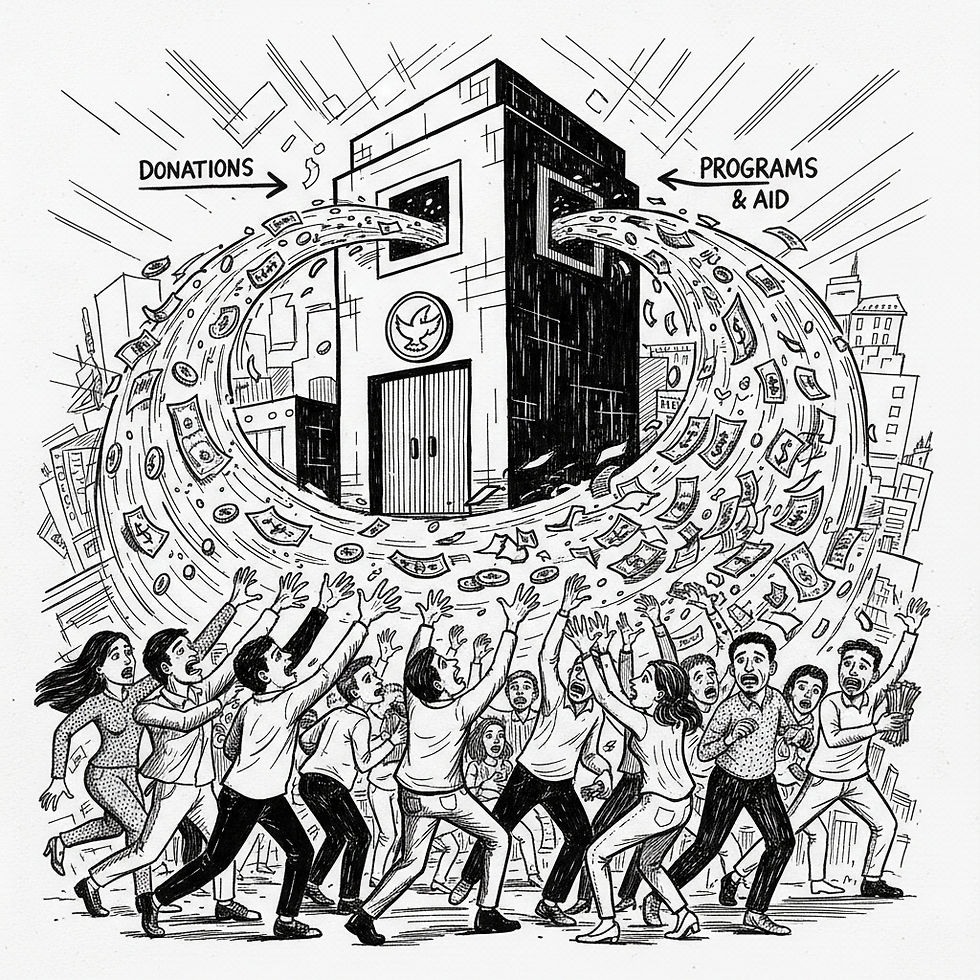
I don't think most people posting these comments are wrong to be curious, or even skeptical. Asking how charitable dollars get spent is a legitimate question, and nonprofits should welcome it. But I think the question deserves a real answer instead of a reflexive one. So let's actually look at what nonprofit leaders make, who decided they should be paid that way, and why the sector ended up here in the first place.
What nonprofit leaders actually make
Start with the number that rarely makes it into the outraged comment thread: the median nonprofit CEO salary is around $123,000 a year, according to Charity Navigator's compensation research covering thousands of charities nationwide. Not $1 million. Not $500,000. Six figures, for someone typically running a multimillion-dollar operation, managing staff, holding legal and financial liability, and answering to a board, funders, regulators, and the public all at once.
The handful of nonprofit executives who do earn seven figures are almost always leading massive hospital systems or university-affiliated health networks, where the job looks a lot more like running a Fortune 500 company than running the community nonprofit most people picture when they hear the word "charity." Those cases are real, and they deserve scrutiny. But they are the outlier, not the norm, and treating them as representative of the sector distorts the whole conversation.
It also helps to look at the trend line, not just the snapshot. Chronicle of Philanthropy research comparing nonprofit and corporate executive pay found that corporate CEO compensation grew 54 percent between 2009 and 2017, while nonprofit executive pay grew 15 percent over the same period, reaching an average of roughly $396,000.
Meanwhile, research from George Mason University's Center on Nonprofits, Philanthropy, and Social Enterprise found that nonprofit wages, excluding hospitals and higher education, actually run lower than both government and for-profit wages for comparable work. Nonprofit leaders aren't outpacing the market. They're lagging it.
The overhead myth, revisited
Underneath a lot of this outrage sits an old and stubborn belief: that a "good" charity spends almost nothing on salaries, overhead, or administration, and pours every dollar directly into programs. It's an intuitive idea. It's also one that the sector's own watchdogs have spent over a decade trying to correct.
In 2013, the leaders of GuideStar, Charity Navigator, and the BBB Wise Giving Alliance — the very organizations donors rely on to vet charities — jointly published an open letter to American donors called the Overhead Myth. Their message was direct: the percentage of a charity's budget spent on administrative and fundraising costs is a poor measure of that charity's actual performance, and the people served by nonprofits don't need low overhead, they need high performance.
That letter has been cited in more than a hundred articles since, and the argument hasn't gotten any less true with time. A nonprofit that underpays its leadership and underinvests in its own infrastructure isn't being virtuous. It's often just becoming less effective at the mission everyone claims to care about.
Who's actually underfunding this work
Here's where the contradiction I mentioned earlier becomes impossible to ignore. A great deal of the "inefficiency" people associate with nonprofits doesn't come from bloated salaries. It comes from the government contracts that fund the work in the first place — the same government many of these commenters didn't want doing the work directly.
Research from the National Council of Nonprofits has found that governments routinely fail to pay the full cost of the services they contract nonprofits to provide, often capping reimbursement for indirect costs well below what it actually takes to run a program responsibly. The Urban Institute's national survey of nonprofit-government contracting found that three out of four nonprofits facing these caps couldn't recover more than a 10 percent indirect cost rate, even though typical overhead rates across for-profit and nonprofit organizations alike run closer to 25 to 35 percent. Nonprofit Finance Fund has reported that its clients often receive something like 70 cents on the dollar for the actual value of the services they deliver under government contract, forcing organizations to backfill the gap with private donations just to keep the doors open.
This is what researchers call the nonprofit starvation cycle: funders assume overhead is waste, so they underfund it; nonprofits, afraid of losing that funding, underreport what they actually need; and the whole system quietly starves the very infrastructure — staffing, systems, leadership — that makes good work possible. So when someone insists a nonprofit should be "run like a business," it's worth asking: would we ever expect a business to deliver services at 70 cents on the dollar and still be profitable? We wouldn't. We'd call that business model unsustainable, because it is.
The turnover the outrage doesn't see
While the public debates whether nonprofit leaders are overpaid, the sector is quietly losing people. The Center for Effective Philanthropy's State of Nonprofits 2024 report found that 95 percent of nonprofit leaders are concerned about staff burnout, and that nonprofit turnover runs around 19 percent, compared to roughly 12 percent across other sectors. Candid's 2024 workforce survey found that inadequate pay and benefits are among the top reasons nonprofit employees give for planning to leave, right alongside being overworked and under-supported.
These aren't people cashing million-dollar paychecks. These are case managers, program coordinators, shelter staff, and yes, executive directors, doing work that most of us would find exhausting on a good day, for wages that frequently fall below what the same skill set would command elsewhere. If we're genuinely worried about whether charitable dollars are being spent well, staff burnout and turnover are a far bigger threat to that mission than a director earning a fair, board-approved salary.
So, how much is too much?
I want to be honest here, because inquiry only works if it goes both directions: there are cases where compensation genuinely is out of line. Research published in Health Affairs by the Lown Institute found wide disparities in nonprofit hospital CEO pay relative to frontline workers, with some ratios reaching 60 times the pay of general staff. Those numbers deserve real scrutiny, and boards that let compensation drift that far from an organization's mission and workforce owe their communities a better explanation than "market rate."
But that's a governance and accountability question, best answered through transparent, board-led compensation review tied to real performance data, not through outrage at a headline number stripped of context. The IRS already requires nonprofit compensation to be "reasonable" and vetted through an independent process. The tools to hold outliers accountable exist. What doesn't help is treating every six-figure nonprofit salary as evidence of the same problem.
The bottom line
If we want nonprofits to run effectively — and I think most of the people leaving those comments genuinely do — we have to be willing to fund the leadership, staffing, and infrastructure that effectiveness requires. We can't ask an organization to be lean and businesslike while also expecting its people to work for gratitude instead of a paycheck. That's not a business model. It's a setup for burnout, turnover, and the exact kind of instability that actually does hurt the communities being served.
So before the next tax filing goes public and the next wave of comments rolls in, maybe the better question isn't "how much is too much?" It's "are we funding this work honestly enough that the people doing it can stay?" I'd genuinely love to know what you think.
Wondering whether your organization's compensation approach would hold up to this kind of scrutiny — in a good way? Let's talk it through. Book a consultation at yourmissionmaven.com and let's build a plan together.
References and further reading:
Charity Navigator. Charity CEO Compensation Study. charitynavigator.org
The Chronicle of Philanthropy. Keeping Nonprofit CEOs Out of the Room When Boards Decide What to Pay Them. philanthropy.com
George Mason University, Center on Nonprofits, Philanthropy, and Social Enterprise. Spotlight on Nonprofit Wages. nonprofitcenter.schar.gmu.edu
GuideStar, Charity Navigator, and BBB Wise Giving Alliance. The Overhead Myth: An Open Letter to the Donors of America (2013). overheadmyth.com
National Council of Nonprofits. Common Problems in Government-Nonprofit Grants and Contracts. councilofnonprofits.org
Nonprofit Finance Fund. State of the Nonprofit Sector Survey. nff.org
Stanford Social Innovation Review. The Hidden Costs of Public Contracting. ssir.org
Center for Effective Philanthropy. State of Nonprofits 2024: What Funders Need to Know. cep.org
Candid. Nonprofit Employees Survey Data Suggests High Staff Turnover Ahead. candid.org
Health Affairs / Lown Institute. Nonprofit Hospital CEO-to-Worker Pay Ratios. healthaffairs.org


Comments